Thermal Oxidizer vs Enclosed Flare: Choosing the Right Solution for VOC and Waste-Gas Control

Thermal Oxidizer vs Enclosed Flare: Choosing the Right Solution for VOC and Waste-Gas Control

.svg)
Introduction
Industrial emissions of VOCs, waste gases or odors are a major environmental and regulatory concern. Combustion-based systems are among the most widely adopted methods to convert these emissions into carbon dioxide and water. But one size doesn’t fit all. Thermal oxidizers are engineered for steady, controlled process exhausts; enclosed flares are built for flexibility across flow and composition extremes. Understanding how these systems differ is key to optimizing capital cost, energy use and compliance performance.
What is a Thermal Oxidizer
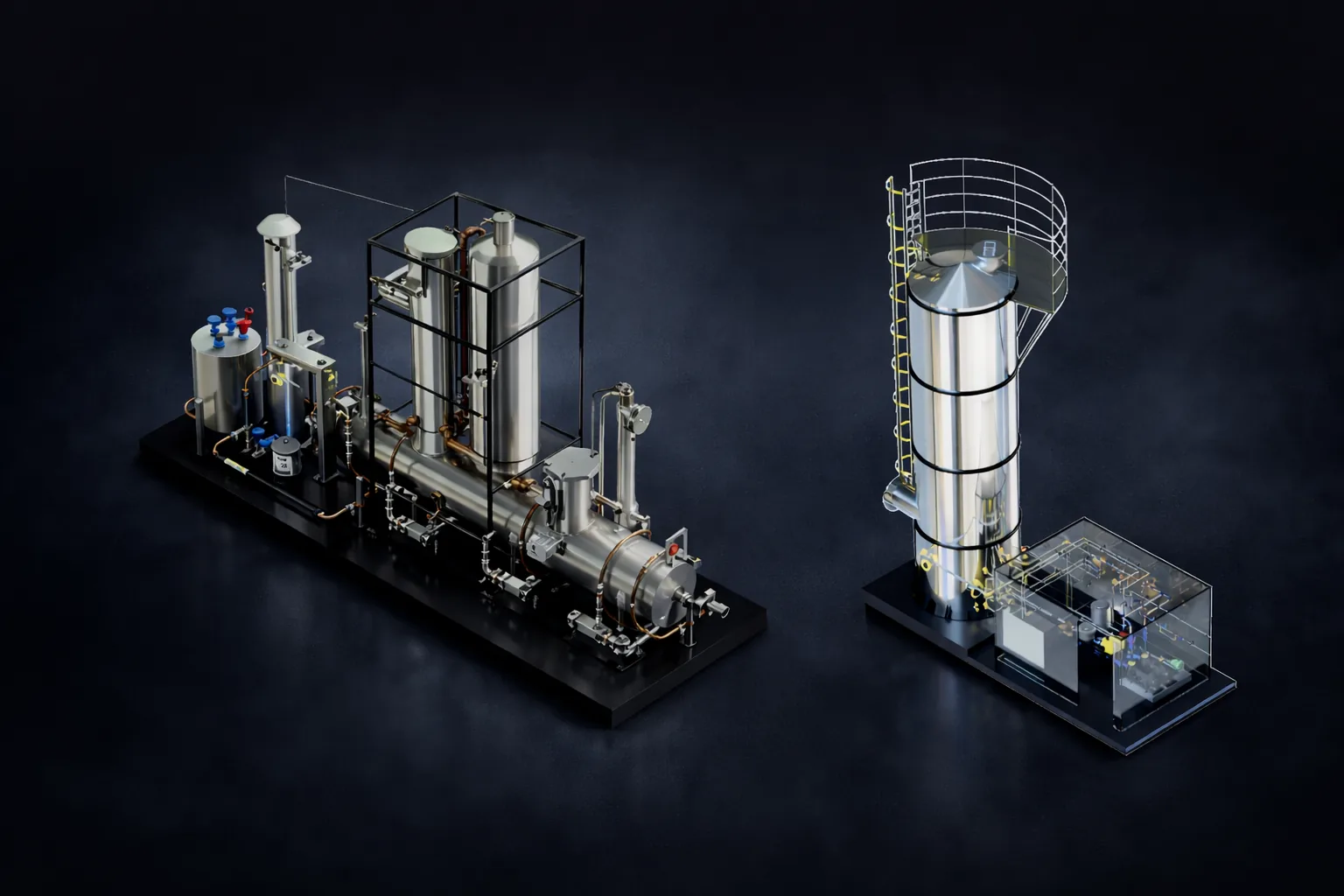
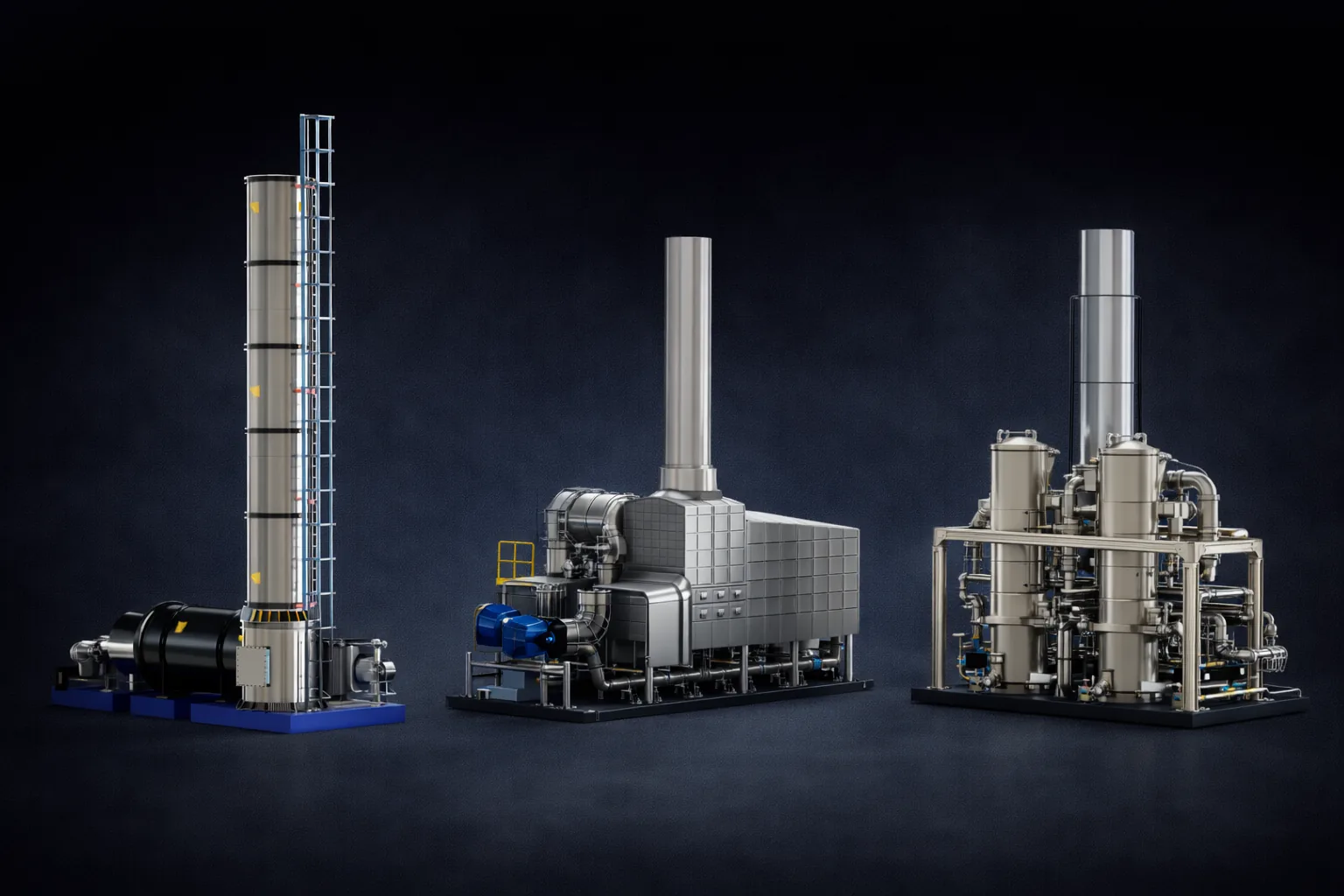
A thermal oxidizer is a combustion system designed to treat a process exhaust stream containing VOCs or odors, ensuring high destruction removal efficiency (DRE) by maintaining sufficient temperature, residence time and mixing. There are several variants:
- Direct-fired (DFTO) — basic burner + chamber
- Recuperative — adds heat-exchanger to recover exhaust heat
- Regenerative (RTO) — uses ceramic media to capture and reuse heat
These systems are typically sized for steady or moderately variable gas flows and concentrations, allowing process integration, heat recovery and continuous duty. With proper design they achieve DREs ≥ 98-99 % and often much higher.
What Is an Enclosed Flare?
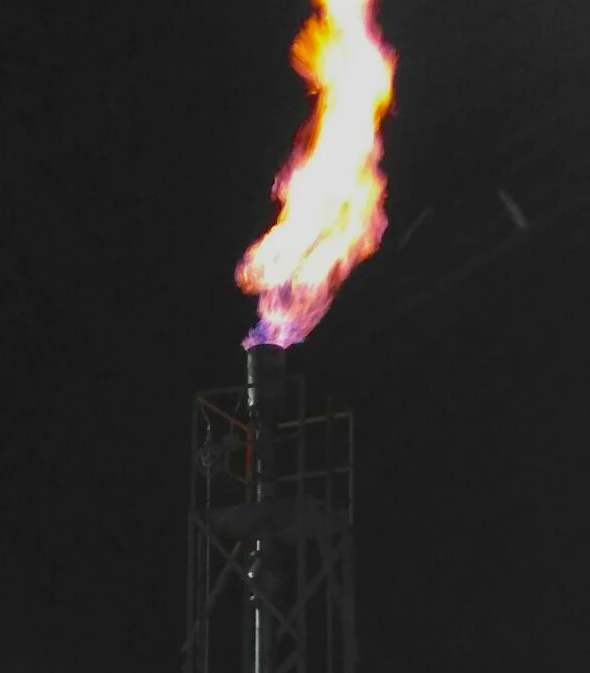
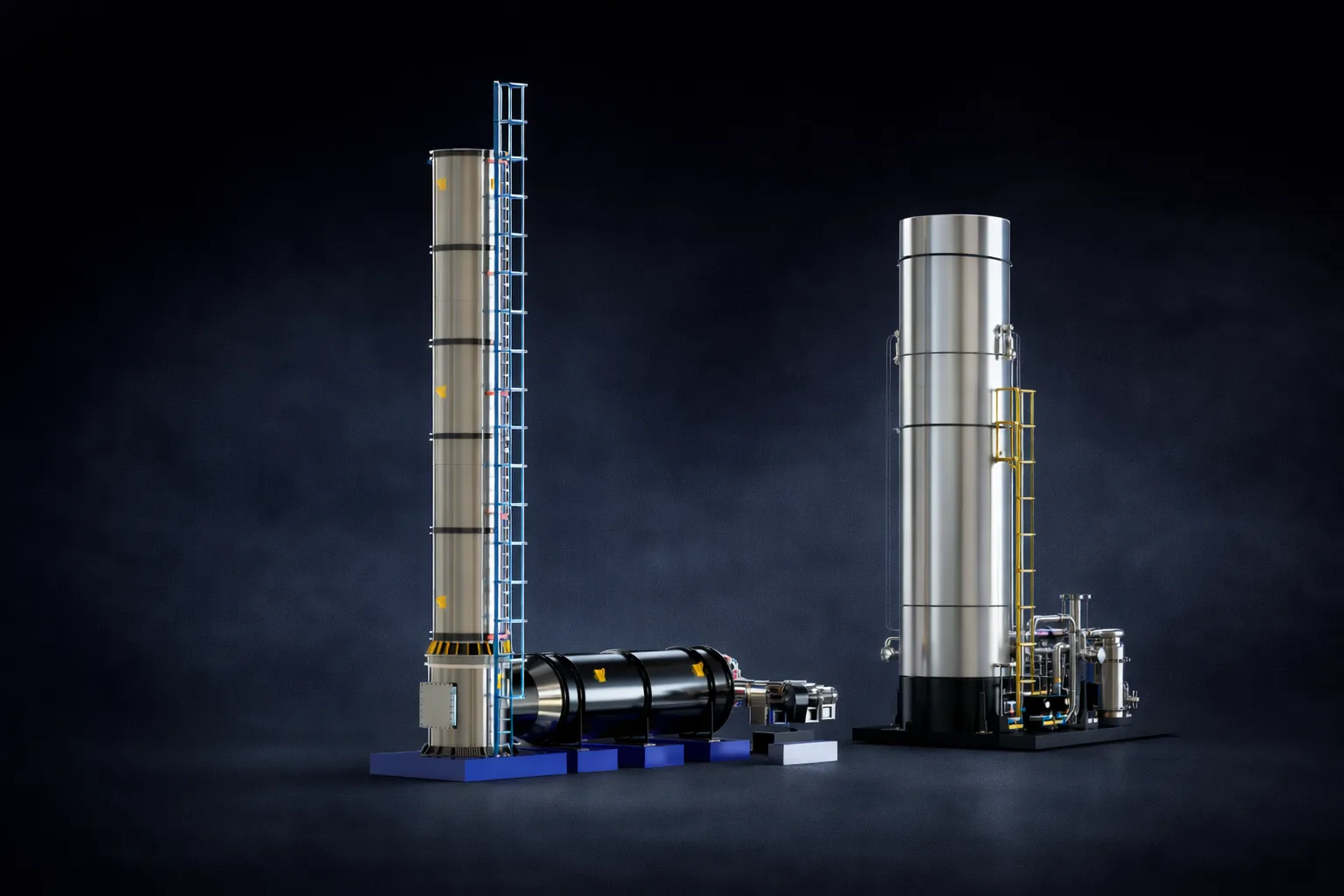
An enclosed flare is a combustion device in which a waste or relief gas is fed into a refractory-lined chamber or enclosure where it is burnt without a visible external flame. Often used in oil & gas, landfill, biogas or petrochemical operations, enclosed flares are designed for variable flow, wide composition range, and rapid change in load. They provide flame invisibility (important for community/urban settings), lower radiant heat exposure, and flexible operation under upset or relief conditions.
Key Design & Operational Differences
Performance & Efficiency
Thermal oxidizer can provide very high, stable DREs when designed for specific process flows — especially when heat recovery is integrated, reducing fuel consumption significantly.
Enclosed flares provide robustness and flexibility: while DRE is still high if properly designed, the variable nature of gas composition, flow rate and assist requirements can make achieving optimal fuel-efficiency more challenging. Because enclosed flares are often chosen for flexibility rather than optimized steady duty, their fuel cost per unit gas treated may be higher in continuous service.
Safety & Regulatory Aspects
Both technologies must satisfy stringent emission, safety and performance criteria:
- Destruction removal efficiency (DRE) targets (often ≥ 98-99 %)
- Visible emission (plume) control
- Stack gas monitoring (CO, O₂, temperature)
- Radiation, noise, and community impact assessment
Enclosed flares have a particular advantage when the site is near communities or when visible flame must be minimized. Thermal oxidizers offer advantages where process exhausts are well-defined and continuous, allowing tighter control over emissions.
When to Use Each Technology
Use a Thermal Oxidizer when:
- VOC/odor exhaust is steady and predictable
- Continuous hours of operation justify the investment and fuel savings
- Emission limits are strict, and heat recovery is economically justified
- Maintenance resources exist to support more complex equipment
Use an Enclosed Flare when:
- Gas flow or composition is highly variable, including relief or emergency loads
- You require minimal visible flame, fewer public impact concerns, or odor control
- Simplicity and rapid response are more important than maximal fuel efficiency
- You deal with waste- or relief-gas streams rather than steady process exhausts
Example Applications
- Pharmaceutical / chemical plant: A thermal oxidizer (recuperative or regenerative type) is installed on a continuous solvent vent stream — efficient, capable of heat recovery and designed for high uptime.
- Biogas / landfill facility: An enclosed flare is selected to combust variable-BTU landfill gas, ensure no visible flame for nearby community, and handle intermittent spikes.
- Refinery relief system: An enclosed flare accommodates large relief volumes during upset scenarios, providing reliable destruction with low visual footprint and robust safety margins.
Conclusion
Both thermal oxidizers and enclosed flares are powerful combustion-based abatement technologies, but their best-fit scenarios differ. Thermal oxidizers excel in steady, controlled process streams with potential for heat recovery and high efficiency. Enclosed flares excel in flexible, variable, high-load or relief-gas scenarios, especially where visible flame, community impact or simplicity are major concerns.
The right solution depends on your facility’s gas composition, flow variability, operational hours, regulatory environment, and energy/fuel cost. A lifecycle cost and performance analysis (CAPEX + OPEX + fuel + maintenance + emissions) will guide you to the optimal choice.