Flare Gas Recovery and Its Role in Making Flaring More Sustainable

Flare Gas Recovery and Its Role in Making Flaring More Sustainable

.svg)
Why Flare Gas Recovery Matters
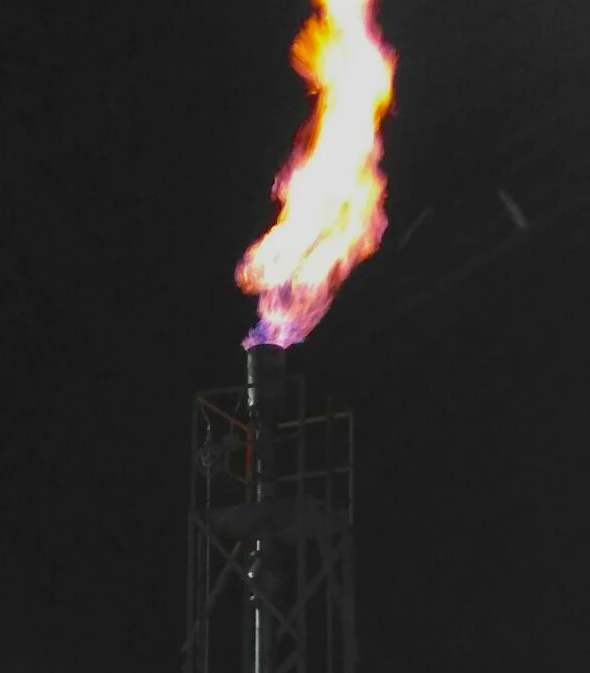
Routine flaring converts usable fuel into heat and emissions. Depending on gas composition and combustion efficiency, each normal cubic metre of gas flared can emit on the order of 2–3 kg of CO₂-equivalent, including methane slip and black carbon.
FGR systems help address this by:
- Reducing greenhouse gas emissions
- Recovering usable energy that would otherwise be lost
- Lowering purchased fuel consumption
- Improving sustainability performance and regulatory compliance
Rather than eliminating flares, FGR systems optimize their use, ensuring flaring is limited to safety and upset conditions.
Flare Gas Recovery Is Not Limited to Methane or Biogas
While FGR is often discussed in the context of methane or biogas systems, its application is much broader. Any operation with routine or continuous flaring of combustible gases can benefit from recovery.
Common industries using FGR include:
- Oil & Gas: Associated gas, tank vapors, purge streams
- Refining: Continuous purge and startup gases from process units
- Petrochemical & Chemical Plants: Hydrocarbon- and hydrogen-rich vent streams
- Biogas & Wastewater Treatment: Excess or off-spec digester gas
- Landfills: Recovery of landfill gas prior to flaring
- Heavy Industry: Coke oven gas, blast furnace gas, and process off-gases
The key requirement is not the industry itself, but whether the gas stream has sufficient heating value, continuity, and reuse potential.
How Flare Gas Recovery Works
A typical FGR system operates as follows:
- Gas that would normally be sent to the flare header is diverted
- The gas is compressed and conditioned to stabilize pressure and flow
- Condensate, moisture, or contaminants may be removed as required
- Recovered gas is reused as fuel, routed back into the process, or exported
The flare remains fully operational. If recovery capacity is exceeded or conditions become unsafe, gas is automatically diverted back to the flare, preserving safety and compliance.
Benefits Across Industrial Applications
Across industries, FGR delivers similar advantages:
- Emission reduction: Lower CO₂ and methane emissions from routine flaring
- Energy efficiency: Converts waste gas into usable fuel
- Cost savings: Reduces reliance on purchased fuel
- Operational improvement: Stabilizes flare systems by reducing continuous loads
In biogas and wastewater applications, FGR is most effective when upstream gas treatment (such as H₂S removal or dehydration) protects compressors and downstream equipment.
When Flare Gas Recovery Makes Sense
FGR is a strong candidate when:
- There is a consistent or semi-continuous flared gas flow
- The gas has adequate heating value
- Recovered gas can be reused on site or monetized
- Emission reduction or sustainability targets are driving decisions
Economic viability improves significantly as routine flaring volumes increase, particularly for steady, predictable sources rather than purely emergency relief.
When Recovery May Be Challenging
FGR may not be practical when:
- Gas flows are very small or highly intermittent
- Gas quality is poor or highly contaminated without treatment
- Air ingress or oxygen dilution is significant
- Capital investment cannot be justified against expected recovery
In such cases, conventional flaring remains the safest and most practical option.
FGR vs Conventional Flaring
Conventional flaring focuses on the safe disposal of excess gas, whereas Flare Gas Recovery (FGR) is engineered to capture and reuse routine flare gas, converting waste streams into valuable energy while reducing emissions.
- Conventional flaring continuously burns excess gas, releasing CO₂ and methane into the atmosphere.
- FGR systems significantly reduce emissions by recovering and reusing routine flare gas.
- Traditional flares offer no energy efficiency, while FGR converts waste gas into usable fuel or power.
- Flaring systems operate continuously, whereas FGR limits flaring to emergency or backup scenarios.
- Sustainability impact shifts from negative in conventional flaring to strongly positive with FGR adoption.
Conclusion
Flare Gas Recovery plays a critical role in making flaring more sustainable — across industries, not just biogas or methane-based systems. By capturing combustible gases that would otherwise be flared, FGR reduces emissions, improves energy efficiency, and strengthens environmental performance, all while preserving the flare’s essential safety function. When applied to the right gas streams, FGR transforms flaring from a necessary loss into a controlled, value-generating operation.